The first evenings of the ACADEMION Cultural Platform
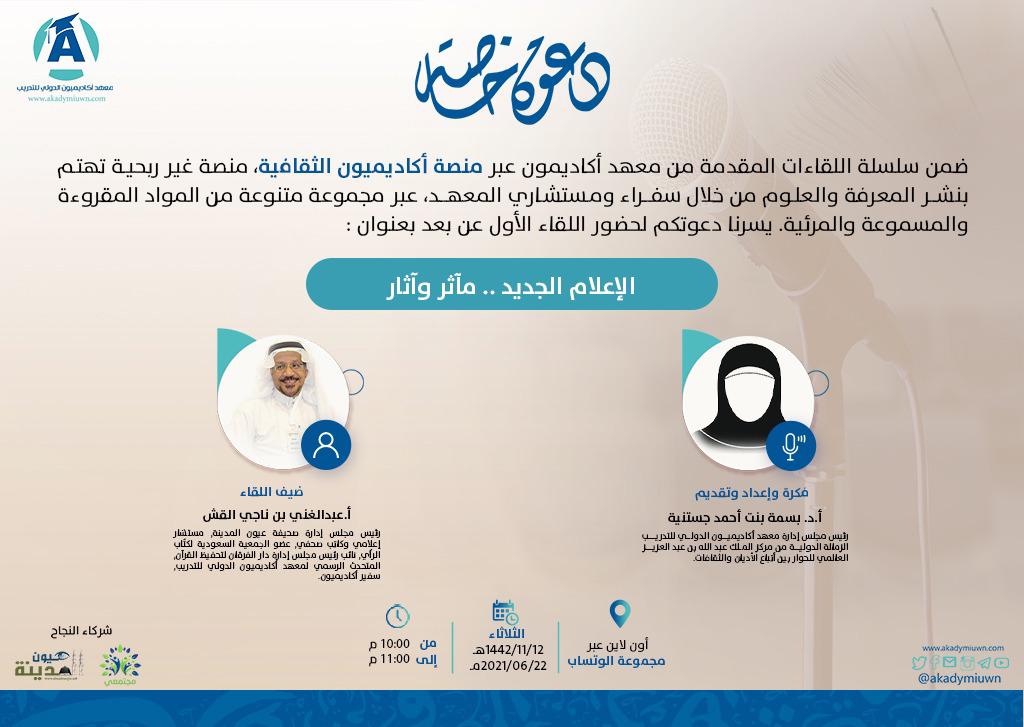
As part of the series of meetings presented by the ACADEMION Institute through the ACADEMION cultural platform, a non-profit platform that aims to spread knowledge and sciences through the institute's ambassadors and advisors, and through a variety of reading, audio, and visual materials, the ACADEMION Institute began its first evening on Tuesday, corresponding to 12/11/1442 AH at exactly 10 PM, via WhatsApp.
The ACADEMION cultural platform is a journey in the realms of science and knowledge, contributing to the development at both the national and human levels, and a kind word is charity. The ACADEMION platform is an invitation to the nation of knowledge to attain sovereignty and civilization. With these words, Dr. Basma Jastania began introducing the evening's guest, Mr. Abdul Ghani bin Naji Al-Qash, the media advisor, journalist, chairman of the board of the Oyun Al-Madina electronic newspaper, member of the Saudi Association of Opinion Writers, ambassador of the ACADEMION Institute, its media spokesperson, vice chairman of the board of Dar Al-Furqan for Quran memorization, and member and chairman of the programs and activities committee in the Association for the Care of Prisoners and Their Families.
في بداية الأمسية تناول الأستاذ القش بتعريف الفرق بين المآثر والآثار حيث بين أن (المآثر) جمع مأثرة وهي ما يتركه الفرد أو الجهة بعد زمن طويل، أما (الآثار) فهو جمع الأثر وهو ما يبقى بعد زمنٍ أثرًا خالدًا، كما ذكر أن الجميع اليوم يعيش في زمن المعلوماتية حيث كثرت وسائل التواصل الاجتماعي ووسائل الالتقاء ونقل المعلومة والمعرفة بين الناس، ويلاحظ وجود العديد من البرامج والمواقع والمنصات وقبلها عصر المنتديات والملتقيات.
Al-Qash pointed out that there are platforms on social media and entities that focus on broadcasting news, raising awareness, and disseminating activities, events, programs, and systems that aim to increase awareness in society, making information accessible to everyone without difficulty, thanks to social media, which is known today as (الإعلام الجديد). In the past, it was very difficult to obtain different information.
Al-Qash raised a question during his evening about: Why strive for media? Whether new media or traditional media? He emphasized that the pursuit of media has been ongoing for a long time, as media has always represented an important point in the history of nations and a starting point for asserting their existence, just as it was with the poets of the pre-Islamic era through their hanging odes and competition in markets like Souq Okaz and Souq Majnah, where they represented media for their tribes and places, boasting about their heroics and achievements, which poets depicted in organized poetic verses, thus serving as a form of media at that time.
وأضاف القش: في الإعلام الجديد بات الجميع يمثل إعلامًا بذاته حتى أصبح كلمة إعلامي يطلق على كل من لديه حسابات في مواقع التواصل الاجتماعي، أو موقعًا إلكترونيًا خاصًا به، فباتت كلمة إعلامي في موقف لا تحسد عليه، والكل أصبح يطلقها على نفسه وانجرف المجتمع معه وصار يطلقها على كل شخص (الإعلامي). Upon searching, you find that they have no connection to media.
Al-Qash confirmed that the result of leniency in society towards anyone who appears in the media and calls themselves a media person is a dangerous outcome that has cast its shadows on society. Everyone is now racing to write and broadcast without any verification or evidence, and it is painful that this has led to what has recently been known in society as celebrities, and unfortunately, society has made them media figures without merit, while true media professionals who represent media clearly have been sidelined.
وأشار القش إلى أن هناك أوامر صدرت ونشرت بمنع إطلاق كلمة إعلامي وهيئة الصحفيين السعوديين تصدت لمنتحل صفة إعلامي من مشاهير شبكات التواصل الاجتماعي كما توعدت الهيئة باتخاذ إجراءات قانونية لمن أسمتهم بالمتطفلين على مهنة الإعلام من هؤلاء المشاهير، راجيًا أن يطبق هذا النظام على الجميع في القريب العاجل.
At the end of the evening, members of the ACADEMION cultural platform directed discussion questions to the guest, and some touched on enriching interventions that would increase knowledge about the topic, with discussions being raised by each of: His Excellency Dr. Mansour Nuzha, Engineer Majid Al-Bijawi, Dr. Najat Al-Saigh, Sheikh Sadiq Farsi, Dr. Sonia Ahmed Maliki, Dr. Muhammad Al-Sharif, Mr. Mishal Al-Mahlawi, Dr. Badriya Al-Maiman, Dr. Muhammad Ilyas, Dr. Sulaiman Al-Zakri, and Dr. Nabihah Al-Ahdal.
Mr. Mishal concluded the evening by saying: Perhaps we can learn from the hoopoe of Solomon the pursuit of knowledge and understanding, and we should have a trust in conveying information and news, so that we are honest with ourselves and others, and so that others can trust us. Say (هذه سبيلي أدعو إلى الله على بصيرة).